"I came not to send peace, but a sword": Kardec on Jesus's hard sayings
Kardec takes on harsh sayings of Jesus, like the one about the sword and the one about hating father and mother, reading them figuratively.
· 3 min read · Sources

In 1 minute
- Kardec attributes the shock of these sayings to successive translations and to the figurative use of words like "hate" and "sword."
- Read this way, they say spiritual values stand above attachments, including family ones, and that any new idea meets resistance.
- He rejects linking Christianity to religious wars, which he blames on human distortion; the reading is Spiritist doctrine, not every tradition.
Full article
Among the sayings attributed to Jesus, some unsettle anyone who expects nothing but gentleness from him. One, in Luke 14, says that whoever does not hate father and mother cannot be his disciple. Another, in Matthew 10, says he did not come to bring peace, but the sword. Christian readers have always needed to explain them, and Allan Kardec, the French educator who systematized Spiritist doctrine in the nineteenth century, devoted a whole chapter of The Gospel According to Spiritism, from 1864, to them — chapter 23, called "Strange Morality."
The chapter's interpretations belong to Spiritist doctrine and fall within the realm of religious belief. They do not represent the reading of every Christian tradition. What is of interest, though, is the method: instead of softening the sayings, Kardec proposes that the literal sense betrays what Jesus meant.
Words that shock
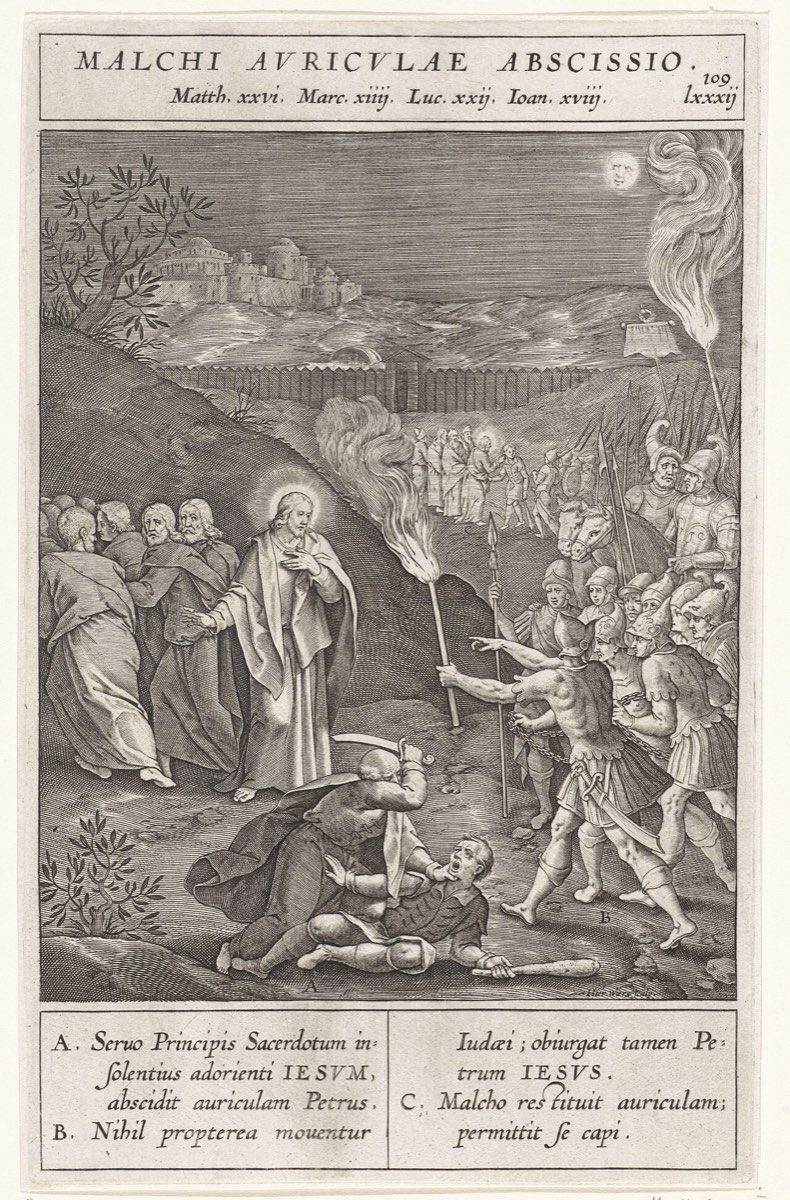
Kardec brings together three passages: the one from Luke about hating father and mother, the one from Matthew about loving one's parents more than Jesus, and the one about the sword. At first glance, he admits, they fit poorly with a gospel of love. His first answer is historical. The Gospels were not written by Jesus, but by others, years after his death. They passed from Aramaic to Greek, to Latin, and to modern languages, and translation may have altered the meaning. Words like "hate" and "sword" would have been used figuratively or as exaggeration.
What remains once hatred is removed
Read this way, the message would be that the values of the Kingdom of Heaven stand above any earthly interest, including family ties. It is not about hating. It is about renouncing the material attachments that stand in the way of spiritual progress, having the courage to follow conscience and truth even when it causes conflict, and giving priority to duty and eternal life.
The same logic explains, for Kardec, the order to let the dead bury their dead, which appears in Matthew 8. The "dead" would be spirits bound to material life. What looks like callousness would be a call to put the Kingdom of God above social rites and earthly attachments.
The sword and the fire
The statement about the sword would be the most misunderstood. Kardec explains it historically: every new idea meets resistance, and Jesus's teaching threatened the interests of the powerful of his time. The struggles would therefore come not from a desire for conflict, but from the transformation the message brings about. According to the chapter, the truer the idea, the stronger the reaction from those who fear losing by it.
The fire Jesus says he wants to cast upon the Earth, in Luke 12, would also be symbolic. It would purify consciences, consume error and prejudice, and prepare the ground for truth. Jesus's sword, in short, is the sword of truth, and the fire is that of moral regeneration.
Who made the wars
The chapter rejects the idea that Christianity caused religious wars. It was men who distorted its essence, Kardec says. Jesus never authorized violence in his name, and persecutions, burnings, and torture would have been born of ignorance and fanaticism, not of the doctrine. The responsibility would lie with those who interpreted the message to suit their own interests.
Spiritism's role
For Kardec, Spiritism fulfills the promise of restoring the true meaning of Christ's words, dispelling deceptions, abuses, and prejudices, and uniting people under the banner of charity and reason. Like nascent Christianity, it too would be fought by pride, selfishness, and fanaticism, but through moral means, not bloody ones. Light, the text says, now springs up from every corner of the Earth.
The chapter ends by separating two things. The harsh words would not be an invitation to violence, but a warning about the cost of living spiritual truth. The "sword" would be the division caused by differences of belief and, at the same time, the separation between ignorance and enlightenment. Peace will come, Kardec states, but only after this refining process.
Sources and references for this article
Allan Kardec, O Evangelho Segundo o Espiritismo (The Gospel According to Spiritism), chapter 23
The Gospel According to Spiritism, Wikipedia (1864 publication and overview)Allan Kardec, WikipediaMatthew, chapter 10 ("I came not to send peace, but a sword"), Almeida Corrigida Fiel BibleLuke, chapter 14 ("if any man come to me, and hate not his father"), Almeida Corrigida Fiel BibleMatthew, chapter 8 ("let the dead bury their dead"), Almeida Corrigida Fiel BibleLuke, chapter 12 ("I am come to send fire on the earth"), Almeida Corrigida Fiel BibleTranslated from Portuguese. This article was rewritten from a post on the original blog, in Portuguese. Read the original
Read next
 Death and beyondHow Allan Kardec tested spirit messages and assembled the Spiritist codification
 Death and beyondKardec, Socrates, and Plato: the morality of Christ separated from dogma in the Spiritist Gospel
 Vedanta and YogaGita, lesson 20: consciousness isn't in the world, the world is in it
 Western esotericism · VideoYeshua and Sophia: a cosmic reading of Jesus and Mary Magdalene
 Death and beyond · VideoWhat souls do after death, in a Spiritist view: work, study, and service