Gita, lesson 6: the hero who collapses and Krishna's response
The sixth lesson follows Arjuna's collapse before his relatives and Krishna's first words, which break the silence with harsh language.
· 1 min read · Sources

In 1 minute
- Arjuna sees relatives and teachers in both armies, loses his will to fight and collapses.
- Krishna breaks the silence with a harsh rebuke, contrasting the hero's image with the attitude of someone who backs down.
- Dayananda distinguishes mature renunciation from fleeing at the wrong moment: dharma calls for presence.
Full article
The opening scene of the Bhagavad Gita's dialogue shows a hero unable to act. That collapse, and Krishna's response to it, is the subject of the sixth lesson in Swami Dayananda Saraswati's series.
The collapse
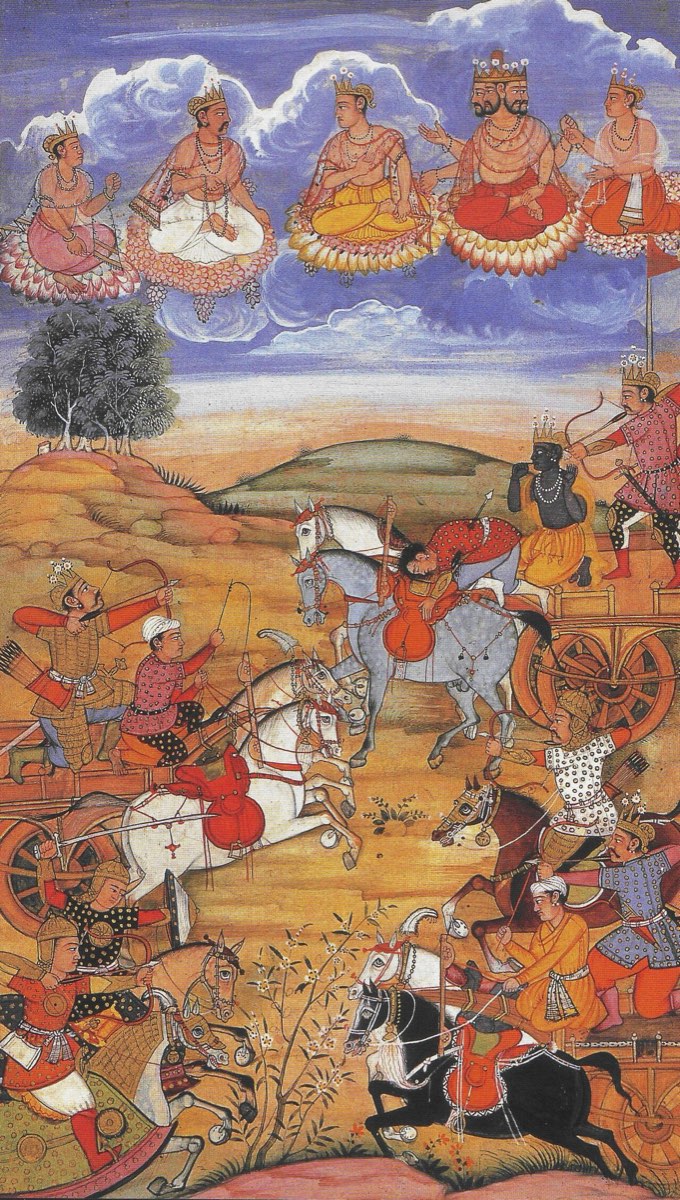
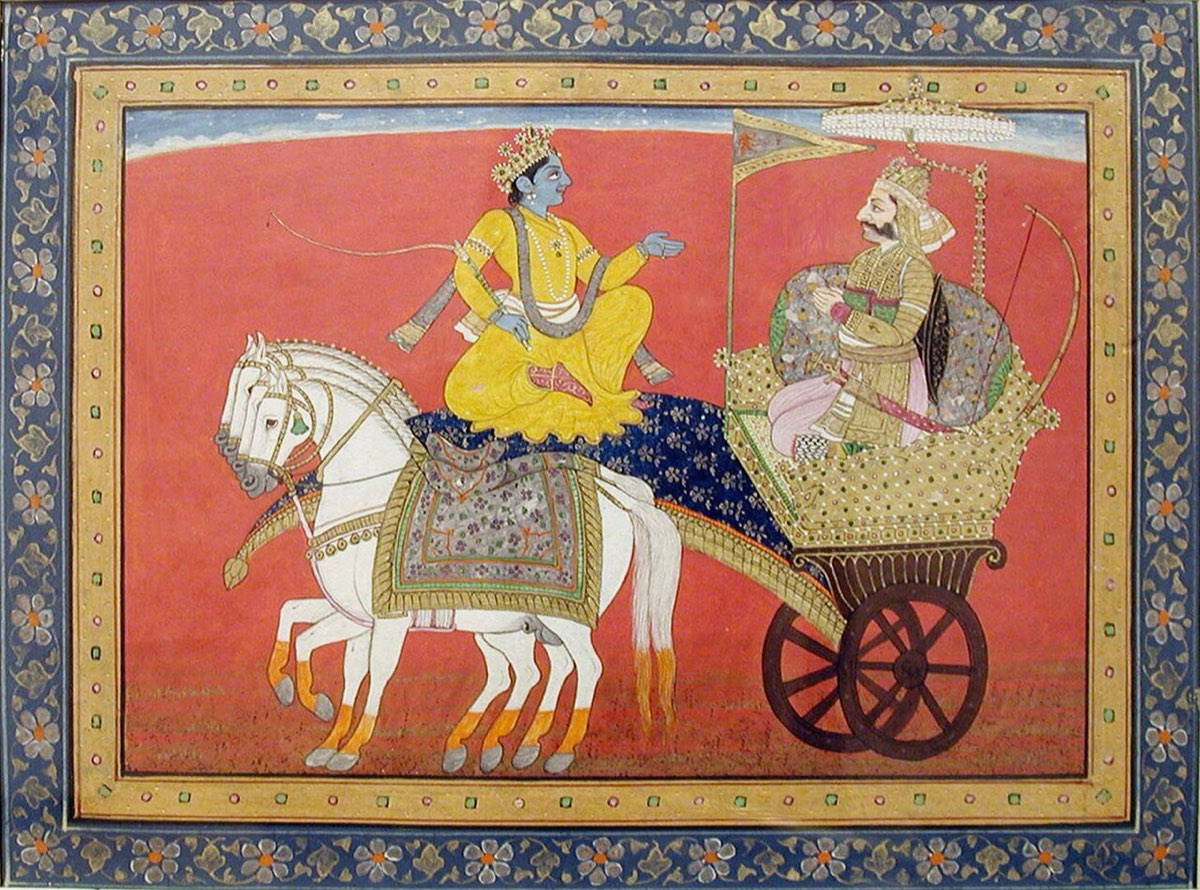
Arjuna looks across the two armies and recognizes uncles, grandfathers, teachers, cousins and friends. Grief overtakes him. He lets his bow fall, sits down in the chariot and says he wants no kingdom, no victory, no pleasure. The text's first chapter is called Arjuna Yoga, and "yoga" functions there as the chapter's central theme, in this case disillusionment. The Gita's strength, for Dayananda, lies in opening with a human collapse that anyone can recognize in themselves.
What Arjuna fears losing
Arjuna's arguments sound reasonable. If the war goes ahead, the family is destroyed, rituals are lost and the social order collapses. With no one left to practice dharma, right conduct, it ceases to exist. The impasse recalls modern wars, where it is no longer clear who wins.
Krishna breaks the silence
Silent until then, Krishna speaks. His first words land like a lash. He asks whether this is really the Arjuna admired by all, and says such despondency is unworthy of someone with his reputation. There is also the observation that Krishna uses the term ārya, associated with someone whose action, speech and thought are aligned with truth. Arjuna's problem, in this reading, is the gap between what he knows and what he does.
Renunciation or flight
Arjuna recalls the Buddha, who left everything behind in search of meaning, but did so before taking on responsibilities. Arjuna stands in the middle of duty, with lives at stake. Renouncing at this moment, in Dayananda's reading, is simply flight.
Before speaking of Brahman or ātman, the Gita begins by facing human pain with clear eyes.
The full study is in the book The Essence of the Bhagavad Gita, by Swami Dayananda Saraswati.
Sources and references for this article
The Essence of the Bhagavad Gita, Swami Dayananda Saraswati (book)
Translated from Portuguese. This article was rewritten from a post on the original blog, in Portuguese. Read the original
Read next
 Vedanta and YogaListening to see: what Vedānta asks of those who want to know themselves
 Vedanta and YogaConsciousness with a body: what Vedānta says the “self” is
 Science and consciousnessVedānta and quantum physics: what the observer has to do with reality
 Western esotericismA Hermetic manifesto against "selective blindness": mind, ether, and archons
 Vedanta and Yoga · VideoThe straw of Agni: what the Kenopanishad teaches about the pride of the gods