Nachiketas and Death: what the Upanishads teach about the eternal Self and immortality
The Upanishads teach that the Atman is identical to Brahman, and tell how the young Nachiketas asked Death for the secret of what comes after life.
· 3 min read · Sources

In 1 minute
- The Upanishads teach that the Atman, the individual Self, is identical to Brahman, the supreme reality, and that knowing this identity is liberation.
- In the story of Nachiketas, the young man asks Yama, the god of death, for the secret of what lies beyond life, and refuses riches and pleasures offered in exchange.
- Images such as the chariot and the razor's edge describe the path as a discipline of mind and senses, and the syllable Om appears as a bridge between the Self and the divine.
Full article
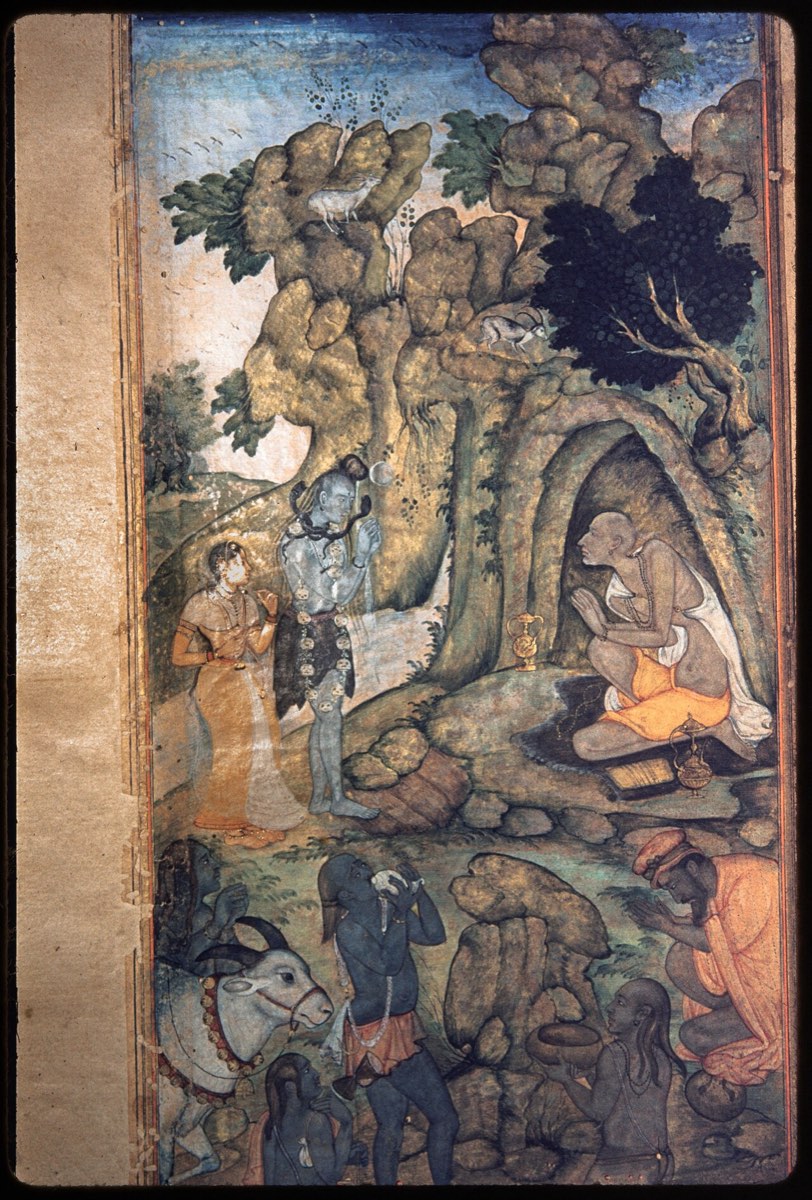
A young man arrives at the house of Death and, instead of riches, asks for an answer: what exists after the end? The scene, one of the best known in the Upanishads, is one of the threads of a video presenting the teachings of these ancient texts of Hinduism, and it is through this scene that the tradition usually explains why knowledge of the Self is worth more than pleasure.
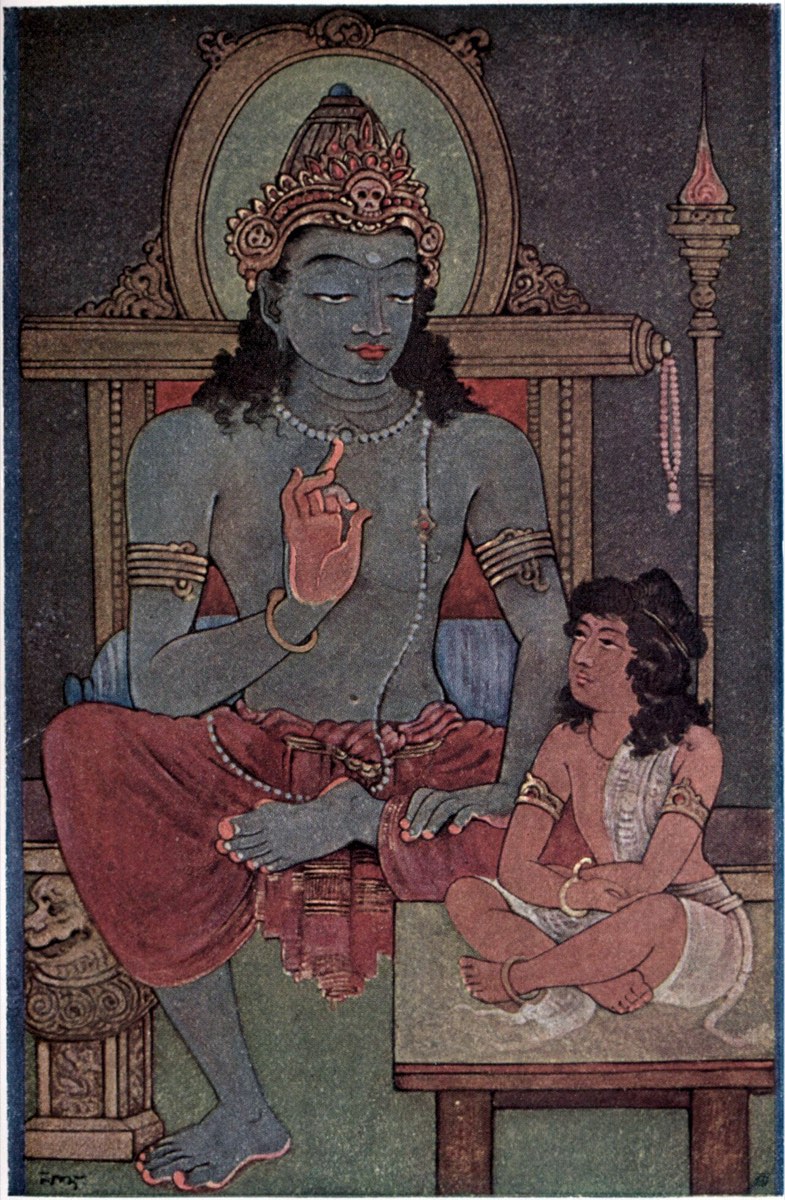
The Upanishads are ancient Indian texts and the foundation of Vedānta. They contain, among other things, transcriptions of spiritual debates in which teachers and disciples appear seated side by side, and in which the teaching sometimes comes from a teenager instructed by death itself, as in the case of Nachiketas, or from kings and wise women. The central idea is that the Atman, the most intimate Self of each person, is one with Brahman, the supreme, universal reality. The text below summarizes what the video presents. The claims about rebirth, liberation, and identity with the divine are teachings of the tradition, not verifiable facts.
God and the Self
In the Upanishads, Brahman is not an entity external to the world: it is the essence of everything that exists. Sensations, thoughts, and forms would be passing manifestations of the eternal. One of the sentences cited sums up the view: “The Self is in everything, and everything is in the Self.”
To know God, in this sense, is to recognize this identity within oneself. The knowledge in question is not intellectual, but lived. It calls for renunciation of the ego, meditation, and purity of heart, and its object is the Atman, the eternal Self dwelling at the center of every being.
From the unreal to the real
A prayer from the texts asks that the faithful be led from the unreal to the real, from darkness to light, from death to immortality. It is the synthesis of the longing to transcend. The ancient sages did not see an opposition between living in the world and seeking the spirit: acting with detachment and surrender would also be a path. The renunciation the Upanishads call for, then, is not of life, but of the ego.
Nachiketas before Yama
The story of Nachiketas puts this teaching on stage. The young man goes to Yama, god of death, to learn the secret of existence. He is offered pleasures, riches, and a long life, and he refuses. He wants to know what happens after death, and to know the Self.
Yama answers, in the version recounted, that those who escape the cycle of rebirths and attain liberation, called mokṣa, are the wise who prefer the Good to Pleasure, renounce what passes, master mind and senses, and meditate on the Self.
The chariot and the razor's edge
Two images from the texts illustrate the path. In the first, the body plays the role of a chariot, and the senses pull like horses; the mind holds the reins, the intellect drives as charioteer, and the Self is the silent passenger. One reaches the destination when discernment leads and the mind is under control.
In the second, the spiritual path is compared to the edge of a razor: narrow, sharp, difficult to walk, and yet, according to the texts, the only one that leads to immortality.
The syllable Om
Om is the primordial sound of the universe in the Indian tradition. It would be the bridge between the individual Self and the divine, the subject of an image cited in the texts: Om functions as the bow, the Self as the arrow, and Brahman as the target. Meditating on the syllable, with love and surrender, would be the most direct way to reach unity with the eternal.
Liberation lies within
For the Upanishads, liberation lies within each person. When the heart is purified, desire grows quiet, and the mind falls silent, the Self reveals its nature: it is neither born nor does it die, it is unchanging. By perceiving it in the “lotus of the heart,” the person becomes one with Brahman, and duality disappears.
The teaching, the video states, is not blind faith. It calls for courage, silence, humility, and inner seeking, and promises, in the texts' own terms, that whoever knows Brahman ceases to die.
Sources and references for this article
Video about the Upanishads (channel not identified in the original)
Upanishads, texts cited in the video
Upanishads, Portuguese WikipediaTranslated from Portuguese. This article was rewritten from a post on the original blog, in Portuguese. Read the original
Read next
 Vedanta and Yoga · VideoUpanishads: what the 108 texts underlying Indian philosophy are, and what they teach
 Vedanta and YogaGita, lesson 4: the inevitable war and the master in the chariot
 Science and consciousnessVedānta and quantum physics: what the observer has to do with reality
 Western esotericismA Hermetic manifesto against "selective blindness": mind, ether, and archons
 Vedanta and Yoga · VideoDissolving the mind: what Vedānta means by freeing oneself from thought