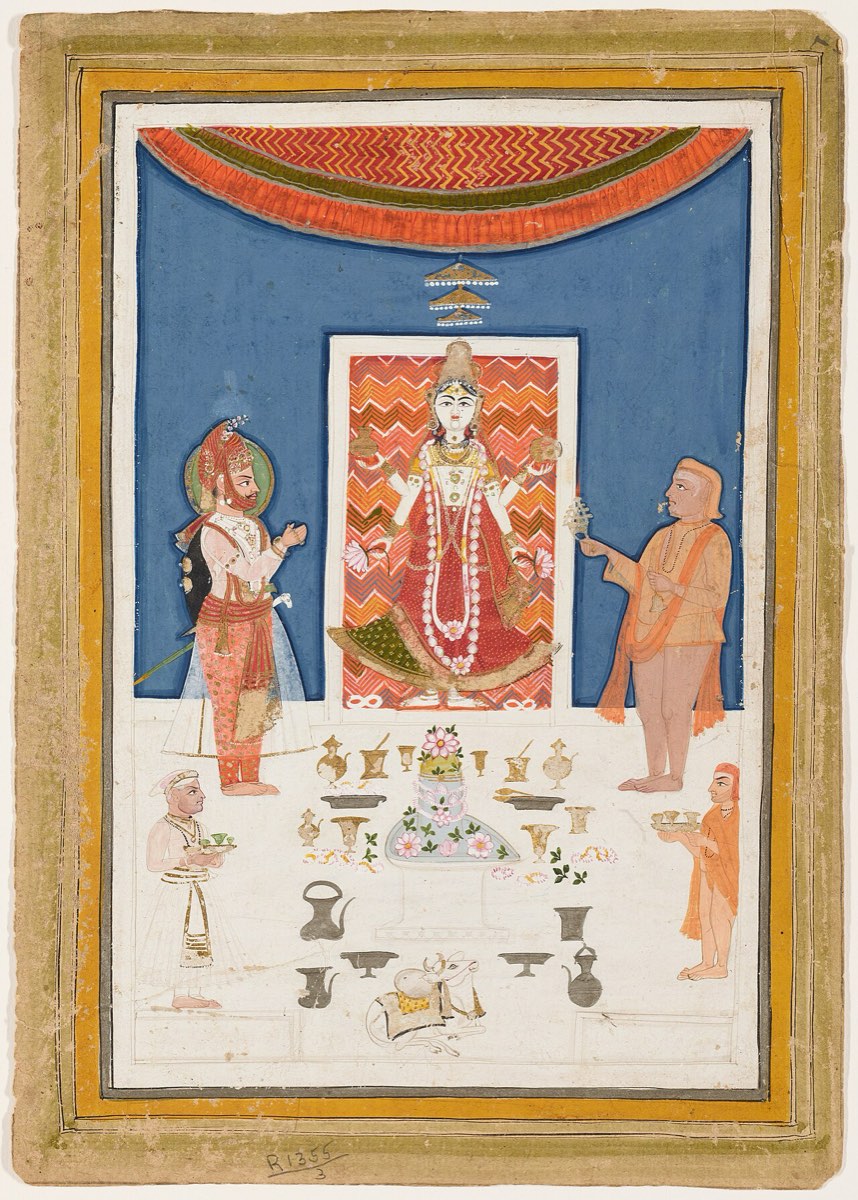
Psalms 23, 91, and 121 read through Vedanta: who is the shepherd who watches over us
Two traditions read the divine protection of the Psalms in opposite ways: as the care of a personal God, or, in Vedanta, as the recognition of one's own Self.
· 3 min read · Sources
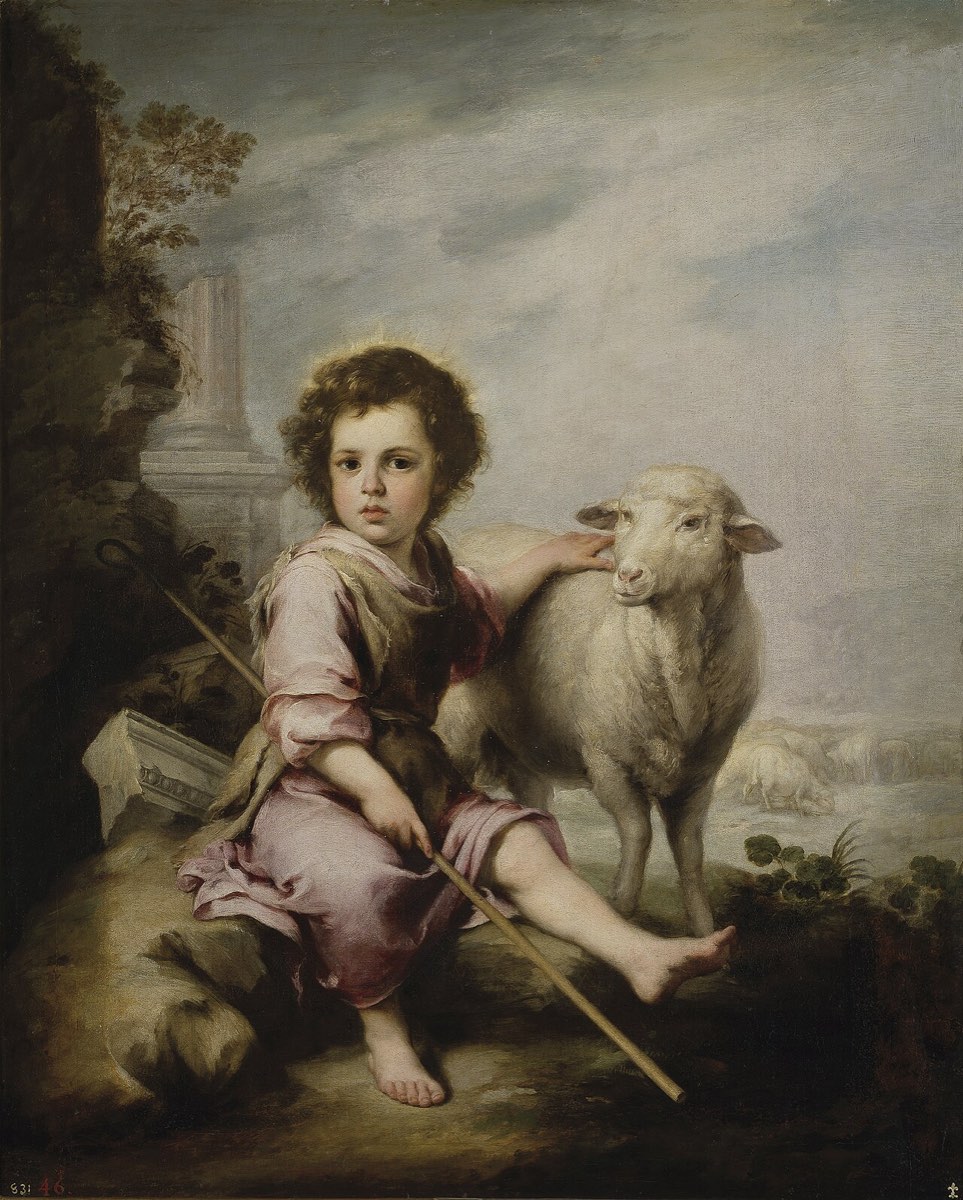

In 1 minute
- In Jewish and Christian tradition, the Psalms are hymns to a personal, protecting God; Vedanta, the Indian school of non-duality, proposes reading them as symbols of the Self.
- In this reading, fear comes from ignorance (avidyā) and dissolves with knowledge (jñāna), and the angels correspond to dharma, the order that sustains the world.
- This is a comparative interpretation, not the position of the biblical traditions themselves, and it leaves open whether security comes from someone who watches over us or from discovering that nothing needed watching over at all.
Full article
Few religious texts are recited in as many moments of distress as the Psalms. The Book of Psalms, a collection of 150 poems and prayers from the Tanakh and the Old Testament, underpins the daily liturgy of Jewish and Christian communities. Psalm 23, traditionally attributed to David, opens with the image of a shepherd leading his flock, and is probably the most quoted of them all.
In those traditions, the relationship is between a person and a God who protects them. There is, however, another way to read the same verses, one that comes from India: that of Vedanta, the philosophical school whose non-dualist branch, Advaita, teaches that reality is one, and that the deepest self of every being is not separate from it. This piece lays out that comparative reading, which is not the traditional interpretation of the Psalms.
A personal God and a Self with no second
The starting difference is one of vocabulary and metaphysics. Advaita literally means "not two." The system holds that supreme Consciousness, Brahman, is the only reality, and that the multiplicity of the world is appearance. The classical formulation is associated with Shankara, an Indian philosopher who lived around the eighth and ninth centuries.
For those who think this way, there is no "outside" from which care could arrive. If the shepherd is the Self that each person is, the protection the psalm promises becomes something else: the recognition of that identity.
The mind that rests
Psalm 23 says: "He maketh me to lie down in green pastures: he leadeth me beside the still waters." In the Vedantic reading, the green pastures are the image of a mind resting in the Self, worn out from the world's agitation. The still waters would represent the gathering of attention, which stops scattering through the senses and turns to inner silence. Vedanta calls that peace śānti, the peace born of self-knowledge.
The next verse, about the restoring of the soul, would signal the rest of someone who lets go of the illusion of control. When a person recognizes that they are not the ego, but the consciousness that observes everything that happens, what this reading calls the freshness of liberation emerges.
Fear and ignorance
"I will fear no evil," the same psalm says. For Vedanta, fear exists as long as there is duality: whoever sees themselves as separate from the whole is vulnerable. Upon recognizing themselves as Brahman, limitless and without a second, a person would see fear dissolve like a shadow before light.
Evil, in this tradition, is understood as ignorance, avidyā. When knowledge, jñāna, removes it, suffering loses its root. The promise that no evil shall befall them would then hold true for those who have stopped identifying with body and mind.
Angels, dharma, and the soul's keeping
Psalm 91 speaks of angels who receive orders concerning the faithful, bear them up in their hands, and keep them from striking their foot against a stone. In the Vedantic reading, the angels would be manifestations of dharma, the universal order that governs everything with precision. The stone would be spiritual ignorance, the forgetting of who we are, and the hand that bears us up would be knowledge. Grace, in this understanding, doesn't spare a person the world's troubles: it reveals that the world was never able to touch them.
In Psalm 121, the Lord keeps the soul, its going out and its coming in. Vedanta associates the Lord with Īśvara, the cosmic intelligence that pervades everything, and sees Īśvara and the Ātman, the individual self, as one. As for the going out and coming in, the jīva, the individual person, appears to arrive in this world and depart from it, but the true self never entered at all. That would hold at the level of everyday experience, the vyāvahārika satya. At the level of absolute truth, the pāramārthika satya, no one is born and no one dies.
Two languages, one question
The reading concludes that the Psalms and Vedanta speak of the same truth with different symbols, joined by the silence born of surrender — the same surrender the Vedantic sage expresses in Aham Brahmāsmi, "I am the absolute." Judaism and Christianity would not accept the equivalence: for them, the psalmist addresses a God who is Other, and the distance between creature and Creator is part of what the verses mean.
A question remains that the two traditions answer in different ways: does the promised security come from someone who watches over us, or from discovering that there was never anything to be watched over?
Sources and references for this article
Book of Psalms (Psalms 23, 91, and 121), Bible
Book of Psalms, WikipediaPsalm 23, WikipediaPsalm 91, WikipediaAdvaita Vedanta, WikipediaTranslated from Portuguese. This article was rewritten from a post on the original blog, in Portuguese. Read the original
Read next
 Vedanta and YogaGita, lesson 13: the four aims of life and what each one can give
 Vedanta and Yoga · VideoDissolving the mind: what Vedānta means by freeing oneself from thought
 Science and consciousnessVedānta and quantum physics: what the observer has to do with reality
 Western esotericismGnosticism: origins, schools, texts, and what survived the repression
 Vedanta and Yoga · VideoWhy pride keeps people from faith: a reflection on the emptiness of living "well"