Do you create the reality you live in? The "mirror of the universe" thesis
A text in seven chapters argues the world reflects each person's inner "vibration"; the idea traces to New Thought, with no support in quantum physics.
· 3 min read · Sources

In 1 minute
- The text "The Mirror of the Universe" holds that thoughts, emotions, and beliefs act as lenses, and that the outer world reflects the "vibration" of the person living it.
- The thesis traces back to Hermeticism and to early-twentieth-century New Thought, the source of the law of attraction, now considered pseudoscientific.
- In physics, "observing" means measuring with an instrument; the outcome doesn't depend on desire, which undoes the quantum backing the text invokes.
Full article
If there is sadness in the eye that looks, the world seems gray; if there is gratitude, everything shines. That's the image that opens "The Mirror of the Universe," a text in seven chapters that proposes a simple, ambitious idea: the reality outside is a reflection of what each person carries within.
The thesis is old in spirit but modern in form. It mixes introspection, Hermeticism, and a loose reading of quantum physics. It's worth examining in parts: what it says, where it comes from, and what science has to say about the sections that borrow its authority.
The mind as a lens
The first chapter claims that what a person thinks, feels, and believes shapes the world they perceive. The mind would create emotional filters that distort or amplify the interpretation of life. In its most cautious version, the idea is compatible with ordinary experience: mood changes what we notice and how we react. The text's practical conclusion is that, to change what's outside, you must first look within.
Quantum physics, borrowed
The second chapter contrasts classical physics, seen as rigid, with quantum physics, which it summarizes as the idea that everything is energy, vibrates, and interacts. It claims that the mere act of observing alters the outcome of an experiment, and concludes that thoughts and intentions shape the quantum field around us.
Here there's a leap. In physics, observing means measuring with an instrument, and measurement interferes with the system for physical reasons, not because of the observer's will. The outcome doesn't depend on desire or human thought. Extending the concept to everyday life is the author's own interpretation, with no experimental support.
Hermes and the mirror
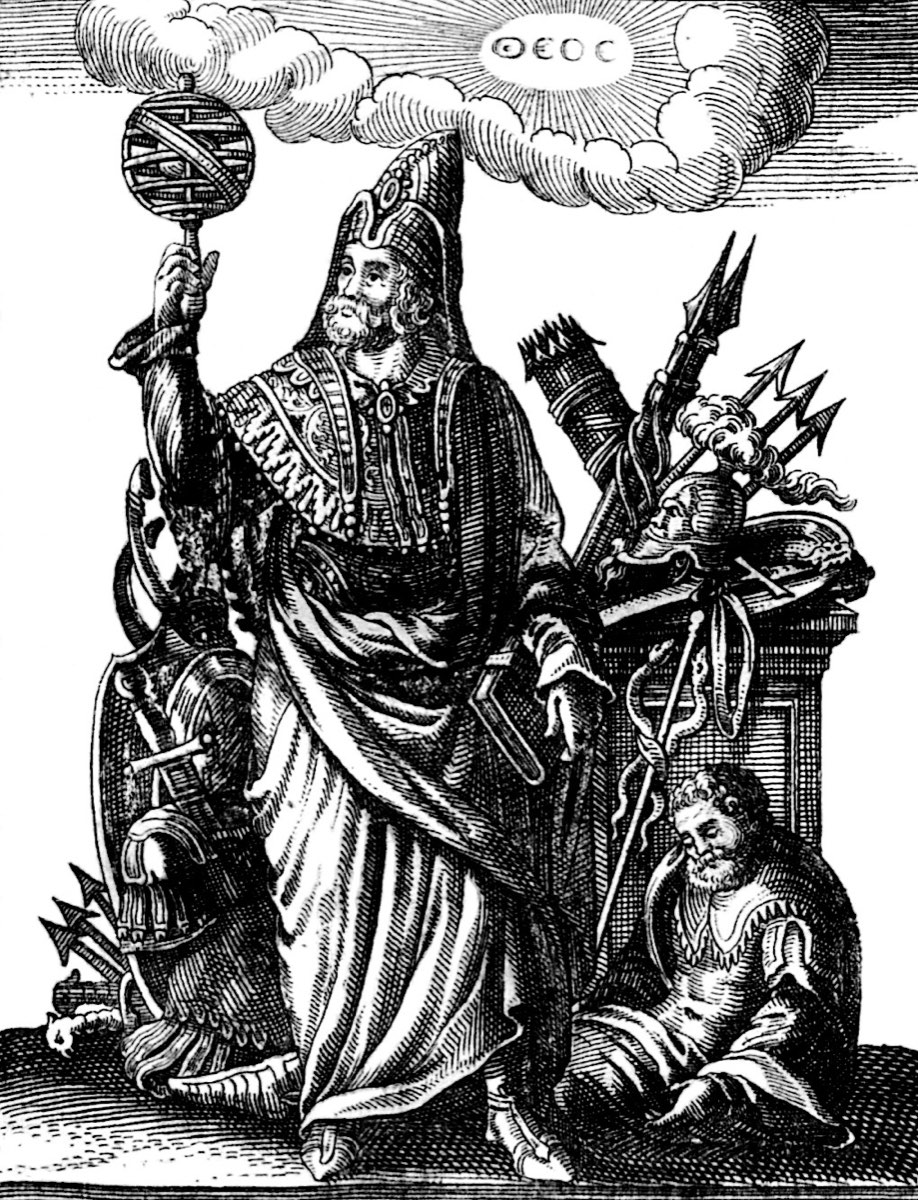
The third chapter turns to Hermes Trismegistus, a legendary figure of Hermeticism, and to the principle "as above, so below." The microcosm, the person, and the macrocosm, the universe, would mirror each other: inner chaos would generate a chaotic life, inner harmony would align the world. Every thought would be an energetic command that attracts compatible experiences.
Attracting what you are
The next chapter makes an inversion: a person doesn't attract what they want, but what they are. Their current frequency would define their reality. Fear, anger, and scarcity would bring more of the same, while gratitude, compassion, and truth would open seemingly locked doors.
This is the law of attraction, a principle that emerged in the early twentieth century, derived from Hermeticism and from New Thought, the American movement that affirms the mind's power over circumstances. It became popular through the book and film The Secret and is now treated as pseudoscientific: it has no credibility in the scientific community, and critics point out that it isn't measurable and that there's no reason to suppose thoughts affect anything outside the mind that has them.
The field of possibilities and practice
The fifth chapter describes reality as an ocean of potentials. Every choice would activate a different version of the future, and by imagining a new life with clarity and genuine feeling, the mind would "collapse" possibilities. The text prescribes meditation, clear intention, and elevated emotions as accelerators of manifestation, without presenting any evidence for this.
The last two chapters shift the focus to practice. The question moves from "what do I want?" to "who am I without my fears, masks, and inherited beliefs?" and the text offers four tools: neutral self-observation of thoughts, visualizing the desired future as if already achieved, gratitude, and consistency, which it calls vibrational habit.
What the text doesn't answer
The final message is that consciousness is our greatest ally, and that by aligning thoughts and emotions with one's deepest intentions, the surrounding world "will have to transform." The person would be the mirror of the universe.
As an invitation to self-observation, the text has value on its own terms. As a theory of reality, it runs into an objection it never considers: if the world merely reflects the inner self, what of those who suffer for causes they never chose?
Sources and references for this article
"The Mirror of the Universe," a chaptered text republished on the Espaço Consciência blogLaw of attraction, WikipediaNew Thought, WikipediaObserver effect, WikipediaTranslated from Portuguese. This article was rewritten from a post on the original blog, in Portuguese. Read the original
Read next
 Accounts and channelings · Video“Your suffering was never yours”: on inherited pain and the quantum reset
 Accounts and channelings · VideoAkashic Records: where the idea of a universal memory comes from, and how to access it
 Western esotericism · VideoThe seven hermetic principles of The Kybalion and the legend of Hermes Trismegistus
 Vedanta and Yoga · VideoThe inner war: what the Bhagavad Gītā says to those caught between duty and fear
 Accounts and channelings · VideoFifth dimension: what physics, spirituality and science fiction say