The seven hermetic principles of The Kybalion and the legend of Hermes Trismegistus
The Kybalion (1908) gathers seven principles attributed to Hermes Trismegistus; a video from the Insightes channel explains them and how to apply them daily.
· 3 min read · Sources

In 1 minute
- The Kybalion, published in 1908 by anonymous authors, brings together seven hermetic principles: mentalism, correspondence, vibration, polarity, rhythm, cause and effect, and gender.
- Hermes Trismegistus, “the thrice-great,” is a mythical figure fusing the Egyptian Thoth with the Greek Hermes, and may never have existed as a person.
- For the video, the principles exist to be lived, and it suggests practices such as breathing, meditation, and paying attention to one's own thoughts.
Full article
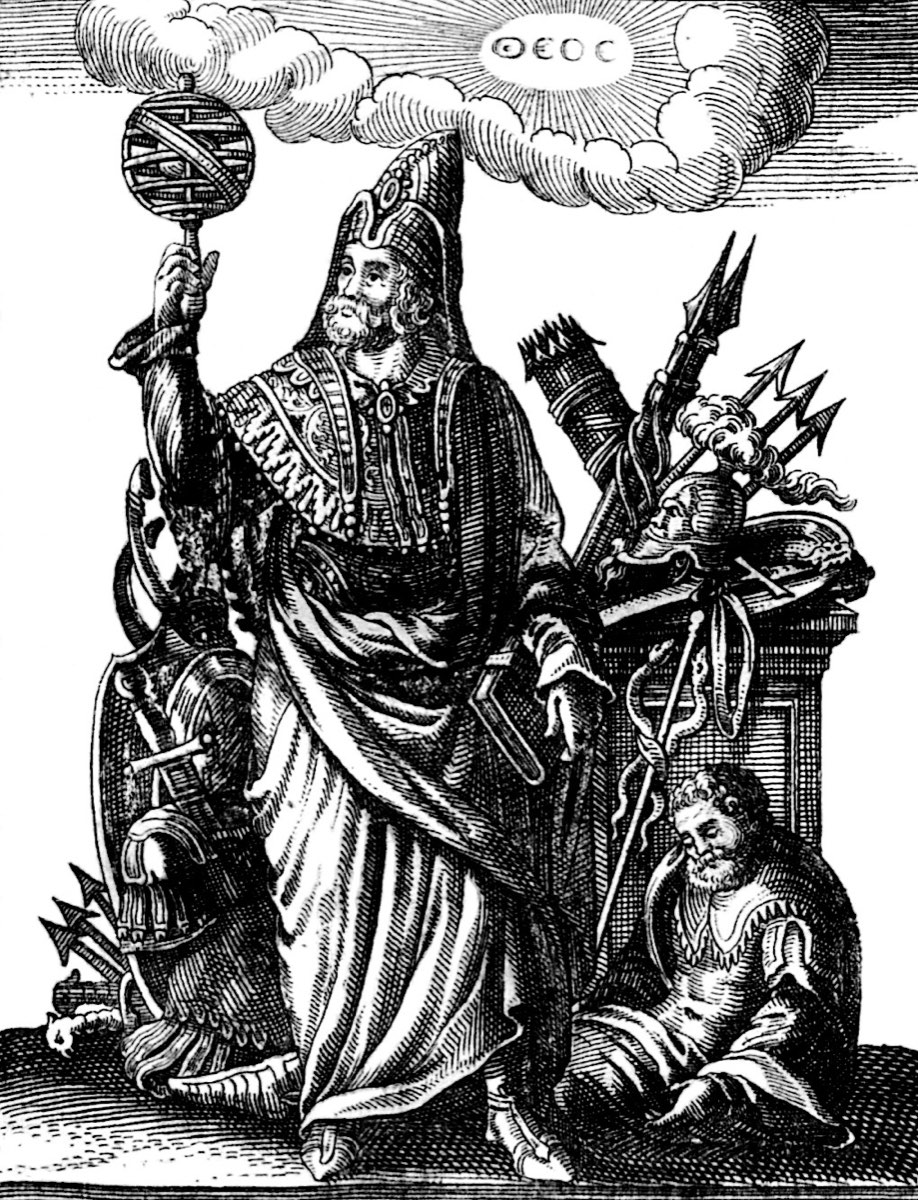
Nobody knows for certain whether Hermes Trismegistus existed, and perhaps the question is poorly framed. The name, “Hermes, the Thrice-Great,” designates a mythical figure of syncretic origin: when the Greeks encountered the Egyptian god Thoth, inventor of writing and interpreter of divine wisdom, they saw in him an equivalent of their own Hermes, messenger of the gods, and added the epithet. In the early centuries of the Christian era, philosophical and religious texts began circulating under this figure's name. This is the so-called hermetic literature.
From that tradition, and many others, a short book was born in 1908 that became the most popular gateway into hermeticism: The Kybalion, published by the Yogi Publication Society under the pseudonym “Three Initiates.” The work claims to contain the essence of what the hermetic schools of Egypt and Greece taught, condensed into seven principles. Its material helped shape the early-twentieth-century New Thought movement, but the ancient lineage it claims is the authors' assertion, not a demonstrated fact. The principles are hermetic philosophy, not science. A video from the Insightes channel serves here as a script for walking through them.
What the seven principles say
The first is mentalism: the All is mind, and the universe is mental. Before being matter or energy, it would be consciousness, and people would exist within the Mind of the All the way a dream exists within the dreamer. Hence the idea that outer reality mirrors the inner one.
The second, correspondence, comes in the formula “as above, so below; as within, so without.” The phrase also appears in alchemical and gnostic texts to indicate the unity between macrocosm and microcosm.
The third is vibration: nothing is still, not the body, not objects, not thoughts. Emotions and mental states would be frequencies, and the task would be to consciously choose which one to emit.
The fourth, polarity, holds that opposites are extremes of the same thing, like cold and heat, degrees of temperature. Understanding it would dissolve the inner war between right and wrong and allow fear to be transformed into action and pain into strength.
The fifth is rhythm. Like the tides and the seasons, everything oscillates: emotions, challenges, phases of life. Accepting the cycle brings, in this reading, maturity and steadiness.
The sixth is cause and effect. Every thought, emotion, or choice would cause something, and nothing would happen by chance, so that a person stops seeing themselves as a victim and starts seeing themselves as responsible.
The seventh, gender, does not refer to biological sex. It speaks of two creative forces: the masculine, which would be impulse and thought, and the feminine, receptivity, incubation, and manifestation. Creation would only happen when the two balance each other, within and without.
From principle to practice
The video illustrates mentalism with a common case. Someone who firmly believes the world is hostile starts noticing hostility everywhere, not because the world changed, but because the mind filters reality to confirm its beliefs. The phenomenon is known in psychology as confirmation bias, the tendency to seek, remember, and interpret information in ways that confirm prior beliefs. The video explains it in terms of frequency, and psychology describes it as a cognitive mechanism, but the practical point is the same: what one expects shapes what one sees.
To change one's “vibration,” the script proposes three steps: observe how one feels, thinks, and acts; consciously choose a higher state, such as gratitude or confidence, even if it feels artificial at first; and turn to tools like conscious breathing, music, affirmations, meditation, visualization, contact with nature, and silence. Repetition, the video says, generates familiarity, then habit, then reality.
In everyday life
The final suggestions follow the principles one by one: choosing thoughts as one chooses seeds; looking inward to change what is outside; using music, environments, and breathing to attune to better states; recognizing that opposite feelings are the same energy at different poles; accepting the cycles, withdrawing in winter and blossoming in summer; acting with intention instead of reacting; and balancing reason and intuition, action and contemplation.
Hermes, the channel says, did not teach to create followers, but to form initiates, people who live the principles instead of merely knowing them. Among the currents said to have drawn on hermetic wisdom, the video cites medieval alchemy, hermetic Kabbalah, esoteric Christianity, Renaissance magic, and Jungian psychology.
The question that remains is the usual one faced with a book like this: whether the principles describe laws of the universe or offer, above all, a discipline of attention. The second reading needs no proof, only practice.
Sources and references for this article
Video from the Insightes channel on the seven hermetic principles
*The Kybalion*, by Three Initiates (1908)The Kybalion, Wikipedia (in Portuguese)Hermes Trismegistus, Wikipedia (in Portuguese)Confirmation bias, Wikipedia (in Portuguese)Translated from Portuguese. This article was rewritten from a post on the original blog, in Portuguese. Read the original
Read next
 Western esotericism · VideoThe Kybalion and its seven principles: a 1908 book that speaks in Egypt's name
 Western esotericism · VideoThe Gospel of Mary: the ancient text in which Magdalene teaches and Peter doubts her
 Vedanta and Yoga · VideoHow to live spiritually without leaving the world: what Vedānta answers
 Death and beyondKardec, Socrates, and Plato: the morality of Christ separated from dogma in the Spiritist Gospel
 Western esotericism · VideoThe Reality of the Rulers: the Nag Hammadi text that reinterprets Genesis