The Kybalion and its seven principles: a 1908 book that speaks in Egypt's name
The Kybalion, published in 1908, sums up Hermeticism in seven principles; a Nova Acrópole lecture ties them to Egypt, Greece and the idea of thinking for oneself.
· 3 min read · Sources

In 1 minute
- The Kybalion was published in 1908 by anonymous authors and organizes Hermetic thought into seven principles, from mentalism to gender.
- Its link to Hermes Trismegistus and to Egypt is a claim of the tradition itself; the ancient Hermetic texts date from the early centuries of the Christian era.
- For teacher Lúcia Helena Galvão, of Nova Acrópole, the value of the principles lies in practice and in distrusting other people's ideas that we adopt as our own.
Full article
Few books of Western spirituality circulate as widely as The Kybalion, a short treatise that promises to condense the wisdom of Hermes Trismegistus into seven principles. The promise carries a detail rarely printed on the cover: the work came out in 1908, in the United States, published by the Yogi Publication Society, signed only by "the Three Initiates."
That does not make it any less influential. The book became one of the pillars of New Thought, the American movement of the early twentieth century, and is still read as an entry point into Hermeticism. The question worth asking is what in it comes from the ancient tradition, what is a modern reading, and how each principle works as an idea.
Hermes, Egypt and what is actually ancient
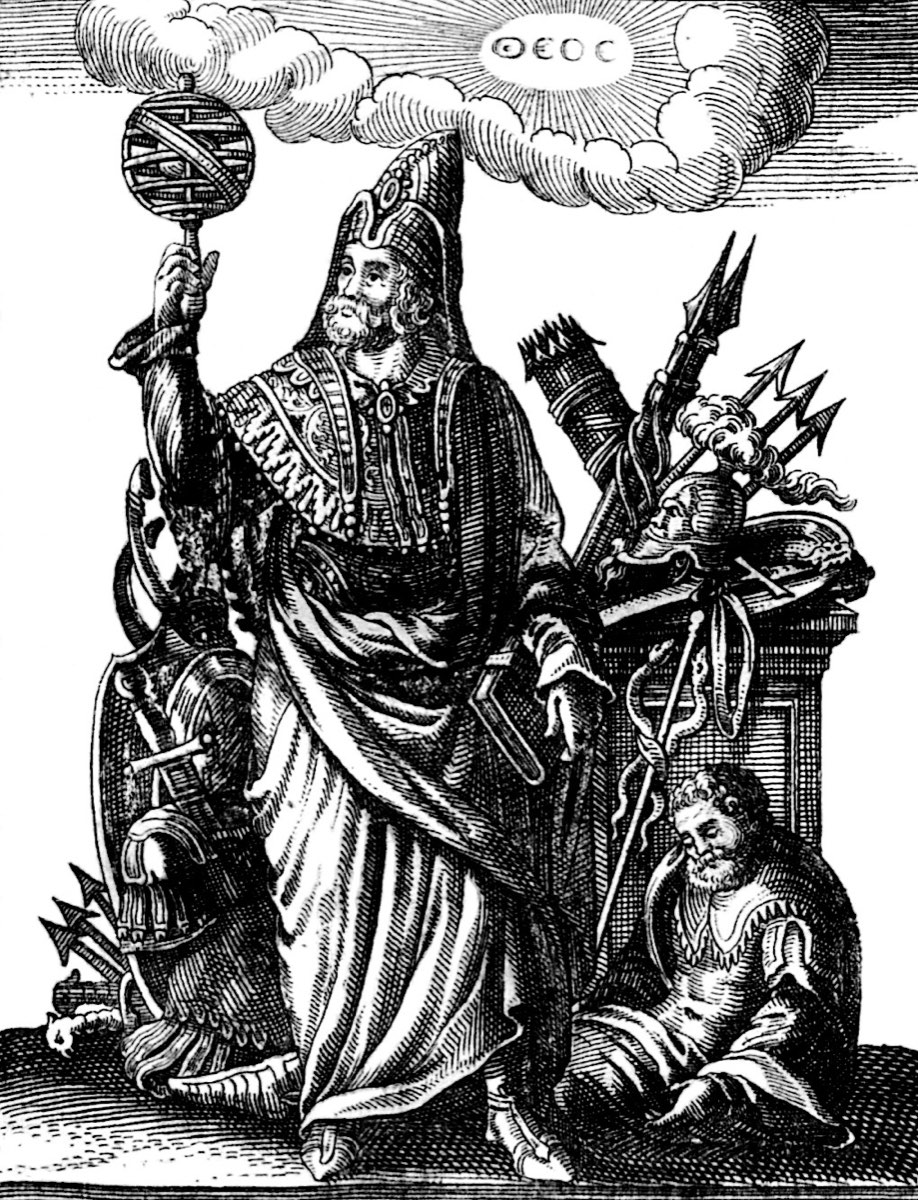
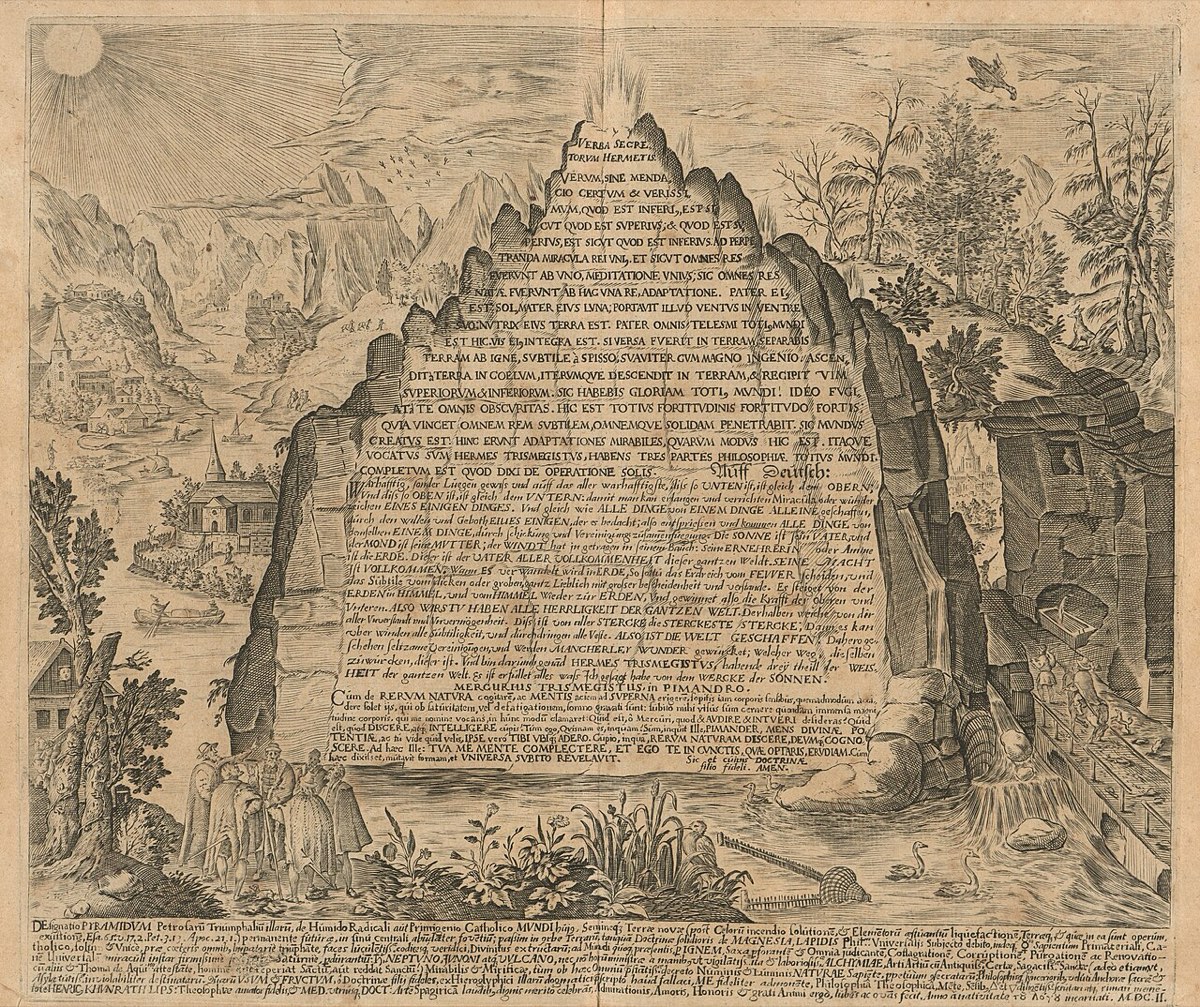
In tradition, Hermes Trismegistus, "the thrice-great," is a sage linked to Egypt, sometimes read as a title shared by several initiates rather than a single person. The Hermetic writings that survived, gathered in the Corpus Hermeticum, were produced chiefly in the second and third centuries of the Christian era, in Greek. The Emerald Tablet, another text cited as a source of Hermeticism, is a separate work.
Teacher Lúcia Helena Galvão, of Nova Acrópole, a school of philosophy founded in Buenos Aires in 1957, treats Egypt as the cradle of this knowledge. In a keynote lecture devoted to the topic, she states that in ancient Egypt everything was sacred, to the point that there was no word for religion: to live was to reconnect with the divine. In her reading, the Book of the Dead would be a set of guidelines for the soul facing the judgment of Osiris, and initiation a path running from respect for nature to self-knowledge and union with the All. These are the school's own interpretations, not academic consensus.
The seven principles
The first, mentalism, holds that the All is mind and the universe is mental. Idea precedes form, the way a carpenter conceives the chair before building it, and from that would come the care one takes with one's own thoughts.
Correspondence states that what is above mirrors what is below: atom, human being and cosmos would follow similar patterns, and whoever knows themselves would understand the universe. Vibration holds that nothing stands still. Spirit would vibrate so fast it would seem motionless, matter so slowly it would seem dense, and raising one's vibration would be work done through art, through virtue, and through noble music.
Polarity treats opposites as extremes of the same nature, differing only in degree: cold and hot, hatred and love. For that reason, one state could be transformed into another. Rhythm speaks of ebb and flow, from the tide to one's mood, and proposes that the swing can be neutralized by whoever anchors themselves at a higher point of consciousness.
Cause and effect denies chance. The lecture sums up the law in a formula, sowing is free and reaping is mandatory, and cites the mathematician Henri Poincaré, for whom chance is simply the name we give to what we do not understand. Finally, gender sees masculine and feminine on every plane: creating would require the union of emission and reception. In the mind, the masculine would be will and the feminine, imagination.
The cuckoo's egg
The image that most stands out in the lecture is that of the cuckoo's egg. The cuckoo lays its eggs in other birds' nests, which incubate and feed the chick as if it were their own, a strategy known in biology as brood parasitism. Lúcia Helena applies the scene to thought: without noticing, we create ideas that the media, culture and other people planted in us, and we defend them as our own children.
For her, freedom begins with identifying those ideas, investigating them, and generating one's own. It is a thesis about intellectual autonomy that holds even for someone who accepts none of the seven principles.
Knowing is practicing
The speaker draws on Helena Blavatsky, founder of the Theosophical Society, to argue that truth is honored in practice: to know and not to live accordingly would be to betray the knowledge. In this reading, the principles only become wisdom once they enter daily conduct.
The lecture closes with a thesis about the universe: it would not be chaos, but an ordering mind. It is left to the reader to decide whether that is philosophy, metaphor or faith. What The Kybalion offers, under any of those readings, is a seven-word vocabulary for thinking about the relationship between mind, order and responsibility.
Sources and references for this article
Keynote lecture by Lúcia Helena Galvão on The Kybalion, Nova Acrópole
The Kybalion, WikipediaHermes Trismegistus, WikipediaCorpus Hermeticum, WikipediaBrood parasitism, WikipediaNova Acrópole, WikipediaTranslated from Portuguese. This article was rewritten from a post on the original blog, in Portuguese. Read the original
Read next
 Western esotericism · VideoThe Kybalion's seven hermetic principles: a map for your own life
 Western esotericism · VideoNag Hammadi Codex VI: eight texts from a library that resists easy labels
 The EastThe Book of Mirdad: Mikhail Naimy's parable on the self, silence, and the word
 Vedanta and YogaGita, lesson 14: from wanting freedom to committing to self-knowledge
 Western esotericism · VideoThe Reality of the Rulers: the Nag Hammadi text that reinterprets Genesis