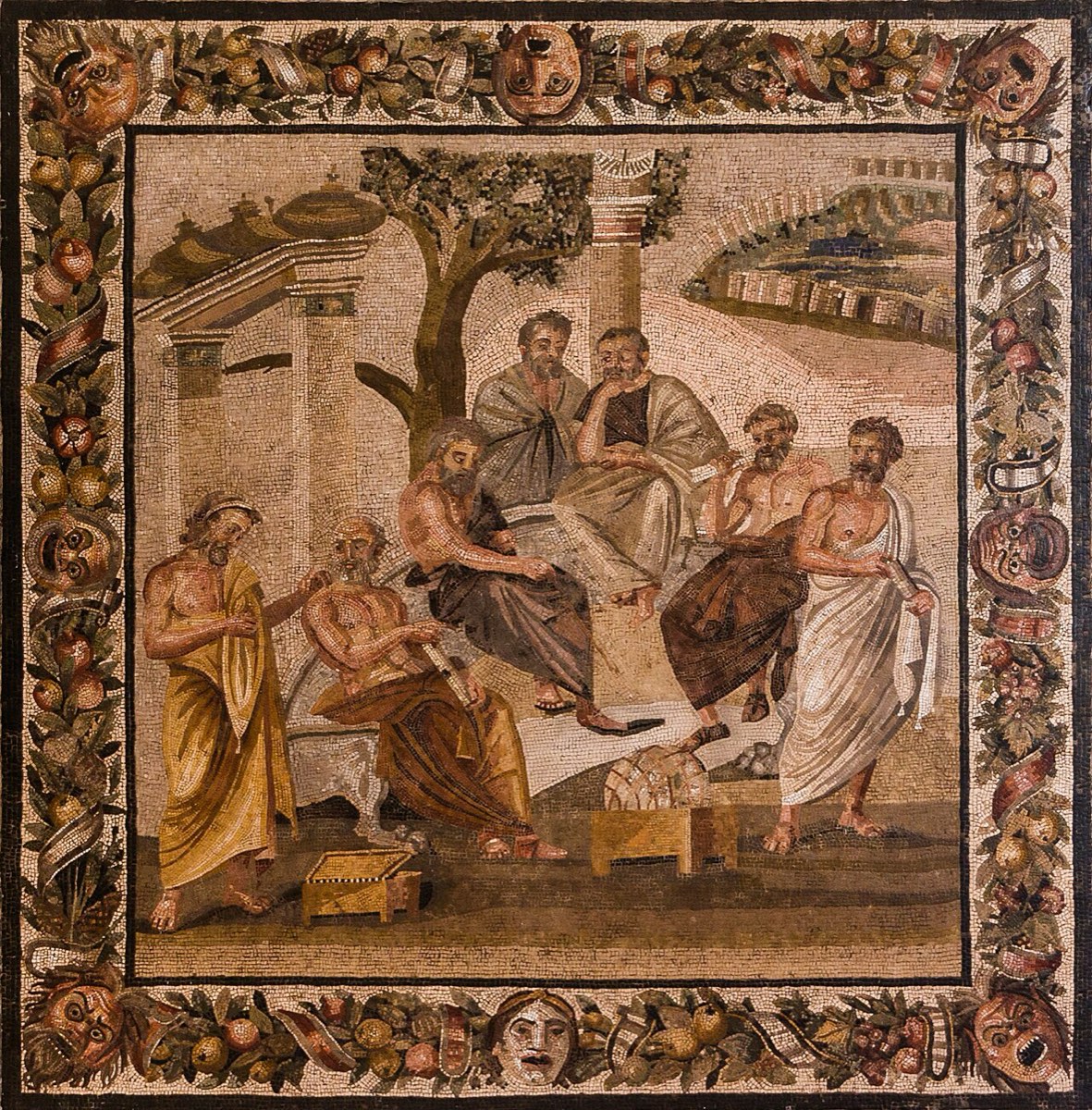
The Kybalion, chapter 10: the Principle of Polarity and choosing your degree
For the Kybalion's Principle of Polarity, opposites like good and evil are extremes of one scale; growth means choosing to rise in degree, not erasing the unwanted side.
· 4 min read · Sources

In 1 minute
- The Principle of Polarity, from The Kybalion, holds that everything has two poles, and that opposites are identical in nature and different only in degree, like heat and cold on a thermometer.
- In Nova Acrópole's reading, the point is not to erase the unwanted side but to recognize it and consciously choose to vibrate at a higher degree.
- On the spiritual plane, polarities are said to have a hierarchy: love, justice, and compassion stand closer to unity than hatred, injustice, and selfishness.
Full article
Where does cold end and heat begin? The question, which sounds like a joke, opens chapter 10 of The Kybalion, devoted to the Principle of Polarity, and the Nova Acrópole teacher uses it to make a bold case: good and evil, light and shadow, love and hatred are extremes of the same scale, and living with awareness means learning to move along it.
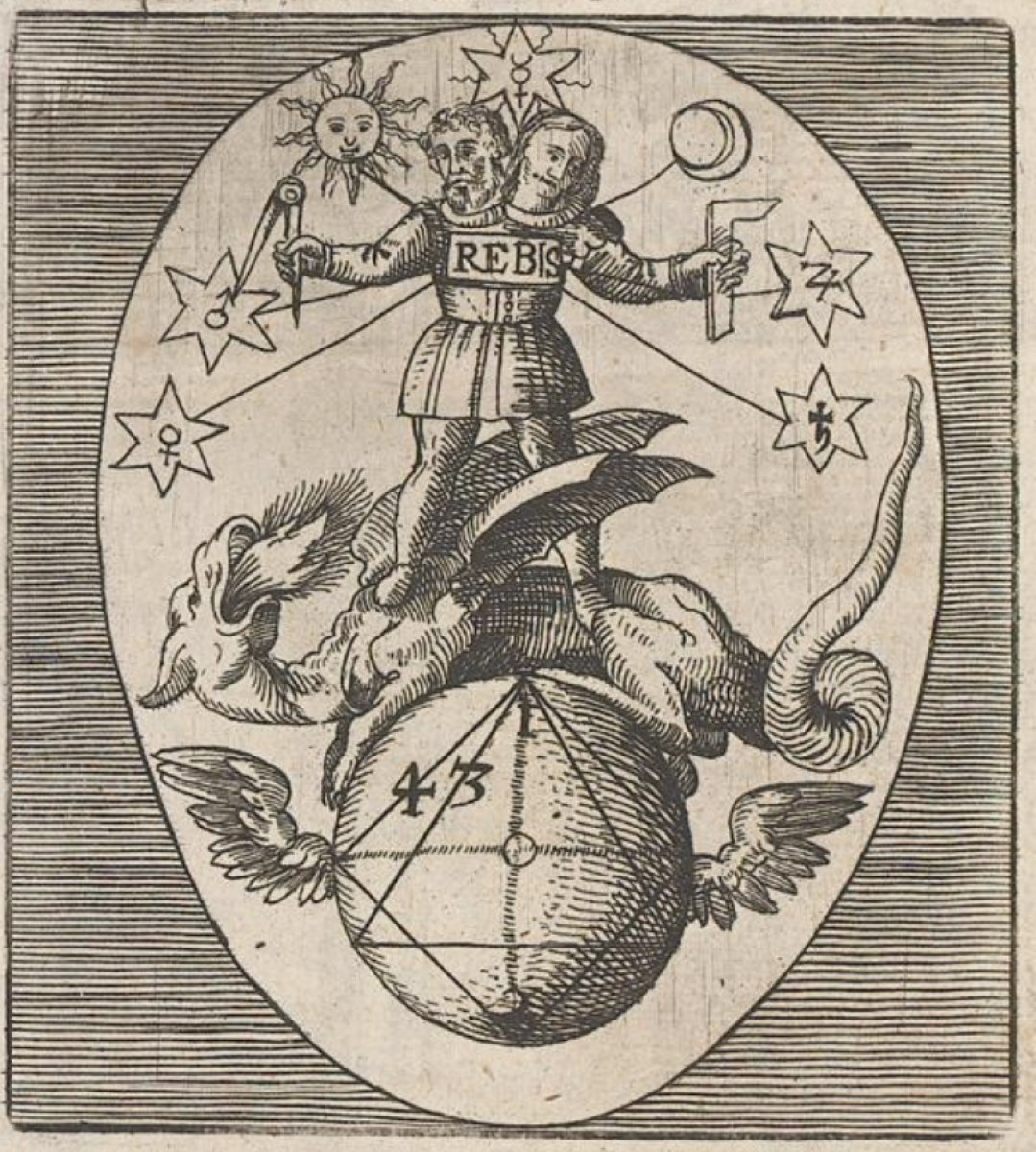
The Kybalion, published in 1908 under the pseudonym “Three Initiates,” organizes the hermetic tradition into seven principles. Polarity, the fourth in the series, holds that everything is dual and has two poles. The ideas about vibration, spiritual planes, and inner transmutation belong to the hermetic tradition and to the teacher, not to science. This piece separates what is in the book from what the lecture adds.
What the book says
The book condenses the principle into a few lines: everything is dual, every thing has two poles and its pair of opposites, and contraries differ only in intensity, so that extremes meet and any truth taken in isolation is only half true. Paradoxes, for that reason, would be reconcilable. The thermometer image comes from the text itself: there is no point where heat ends and cold begins, only degrees of the same thing. The same, it holds, applies to light and darkness, large and small, hard and soft.
The practical consequence, in the lecture, is to drop simplistic labels. Instead of asking whether something is good or bad, right or wrong, hermeticism invites one to locate the point where one stands and the point one wants to reach. Anger and compassion, selfishness and brotherhood, would be points on the same emotional ruler, and it is up to each person to move the needle upward.
Raising rather than erasing
The teacher insists the goal is not to rip out the unwanted side, but to recognize that it exists, accept it as part of human duality, and consciously choose a higher degree. Whoever feels sadness has the capacity for joy. Whoever feels fear can reach courage. Even selfishness would already contain the seeds of compassion.
That is why the lecture warns against denial. Refusing to admit a negative tendency does not erase it; it only makes it invisible, and more dangerous. The yin-yang symbol, with a white dot in the black and a black dot in the white, is invoked as a summary of the principle: there is no light without shadow, nor shadow without light, and harmony comes from the balance between opposites.
Hermetic practice, in this reading, is transmutation: moving from a lower degree, such as impatience, to a higher one of the same nature, such as serenity. That requires knowing where one stands. Just as GPS cannot plot a route without a starting point, there is no evolving without an honest diagnosis of oneself. The teacher suggests a self-examination: which pole a person occupies most often, and what currently fills their emotional, mental, and physical life. The next step follows: climbing one rung. The ladder is infinite, but every rung counts.
No one is just the villain
The lecture criticizes the black-and-white morality of soap operas, with the good guy always good and the villain doomed to wickedness. The real human being, it argues, is a field of possibilities: the criminal can feel compassion, the saint can doubt, and everyone carries the seeds of both their best and their worst. In the teacher's words: “Being human is a project, not a finished form.”
The relative and the hierarchical
The material world, the lecture says, is relative, with no absolute right or wrong. But as one rises through the mental and spiritual planes, polarities begin to carry different value. Love ranks above hatred, justice sits closer to unity than injustice, and compassion aligns more closely with the ALL, the Absolute of hermetic philosophy, than selfishness does. That is why, the teacher concludes, it is not enough to balance the poles: one must choose the side that elevates.
Here the lecture adds a caveat the book itself makes, in its own way: the relativity of opposites does not license moral relativism. Knowing that good and evil are degrees on a scale does not mean it makes no difference which point on it one occupies.
A fire that is shared
The teacher tells how elevated people elevate others. Wherever a Pythagorean walked, he says, people felt better, as though something in them wanted to align with that vibration. That contagion of the good, he cautions, does not replace personal merit: inspiration is possible, but change still requires one's own will.
The image chosen is fire, which is shared without diminishing, that lights, warms, and guides. A small flame in the dark can save many.
Changing poles is freedom
The lecture closes with Pinocchio. A human being, it says, is neither a wooden puppet nor a chair: they can choose where they want to vibrate. Nothing is fixed, every pain can be elevated, and every person carries within them the opposite of what they are living. The next chapter of The Kybalion covers the Principle of Rhythm.
Sources and references for this article
Nova Acrópole lecture on The Kybalion, chapter 10
_The Kybalion_, chapter 10: Polarity (Three Initiates, 1908; full English text, Project Gutenberg)Kybalion, Wikipedia (1908 publication and the seven principles)Translated from Portuguese. This article was rewritten from a post on the original blog, in Portuguese. Read the original
Read next
 Western esotericism · VideoThe Kybalion and its seven principles: a 1908 book that speaks in Egypt's name
 Western esotericismA Hermetic manifesto against "selective blindness": mind, ether, and archons
 Vedanta and YogaGita, lesson 13: the four aims of life and what each one can give
 Vedanta and YogaVedānta: texts, schools, and the study method of one of India's six philosophies
 Western esotericism · VideoWhy No Outer Change Lasts Without Inner Change, According to Stoic Philosophy